Natural Dyes and the Marigold Cycle.
While researching how to make natural dyes following the Unit 2 feedback, I discovered that marigolds are commonly used for natural dyeing and can also be used to make painting ink. Marigolds are something we grow every year in our garden. They are an incredibly useful plant, particularly as a companion plant for things like tomatoes, as they attract a lot of the aphids and other insects that would otherwise attack the crop. We have also planted them between more tender flowers, including our dahlias, lilies, and lavatera, to help give those plants a better chance through the season. They have always pulled their weight in the garden in that regard, but what I had not realised until now is that they had another use entirely and could also be a source of natural pigment and ink.
This stood out to me immediately as another way to connect the different strands of my practice. I have written before about how gardening sits alongside making as a part of what the practice actually is, not as a separate activity but as another form of the same attentiveness. The quiet, repetitive work of tending plants, noticing how things are growing, responding to what a particular season asks for, operates on the same frequency as the work I do in the studio. There is an observation in both, a willingness to be led by something other than a plan. The herbology post I wrote earlier this year was an early attempt to articulate some of that, and the growing interest I have developed in plants and their uses, including the family copy of Culpeper's Complete Herbal that was passed on to me, has only deepened since then. Finding out that the marigolds we have been growing as companion plants for years could also yield material for the work felt like a natural extension of something that was already in motion.
The relationship between painting, landscape, and the body has been central to my work throughout the MA, and there is something in the particular cycle of growing marigolds from seed, tending to them through the season, and then harvesting and drying them at the end of it to make my own inks that feels genuinely significant. It is not just sourcing a material. It is participating in the same slow process of growth and change that I have been drawing on as a subject and a metaphor for the last two years.
In hindsight I wish I had come across this sooner. I would have dried last year's marigolds and used them already, which would have given me the chance to experiment with that whole cycle before the end of the course. What I have done instead is grow a much larger number this season so that come September and October I will have enough to dry out and potentially begin making my own painting inks. At the point of writing this I have sown nearly fifty seeds, with more to come. There have been some casualties along the way, as something seems to be eating the ones that have made it out into the garden, but the ones planted on the balcony have fared much better and I will keep planting as the season continues and the soil warms up. Even if I only manage to get as far as experimenting with the flowers before they go over, it will be worth seeing what happens.
There is also something in this that connects to a broader question I have been sitting with about pace and sustainability in the practice. One of the things that came through clearly in the Unit 2 feedback, and that I have been thinking about throughout Unit 3, is how to make a practice that works with the constraints of chronic illness rather than against them. Growing your own materials is, in its own way, a form of that. It asks you to plan ahead, to be patient, to work with the rhythms of a season rather than expecting everything to be immediately available. It is a different relationship to materials than walking into a shop and buying a bottle of ink, and that difference feels meaningful. There is something in the slowness of it that I want to lean into rather than rush past.
It is also worth noting that this connects directly to what the Unit 2 feedback was gesturing towards when it suggested thinking about tree-derived inks, oak gall in particular, and the significance of using materials that carry their own relationship to the subject matter. I have not yet experimented with oak gall ink, and that remains something I want to explore. But the marigolds feel like a way into that same territory through a different route, one that is already embedded in my daily life rather than requiring me to source something unfamiliar. The plants are already here. The process is already underway. I am just beginning to understand what that process might mean for the work.
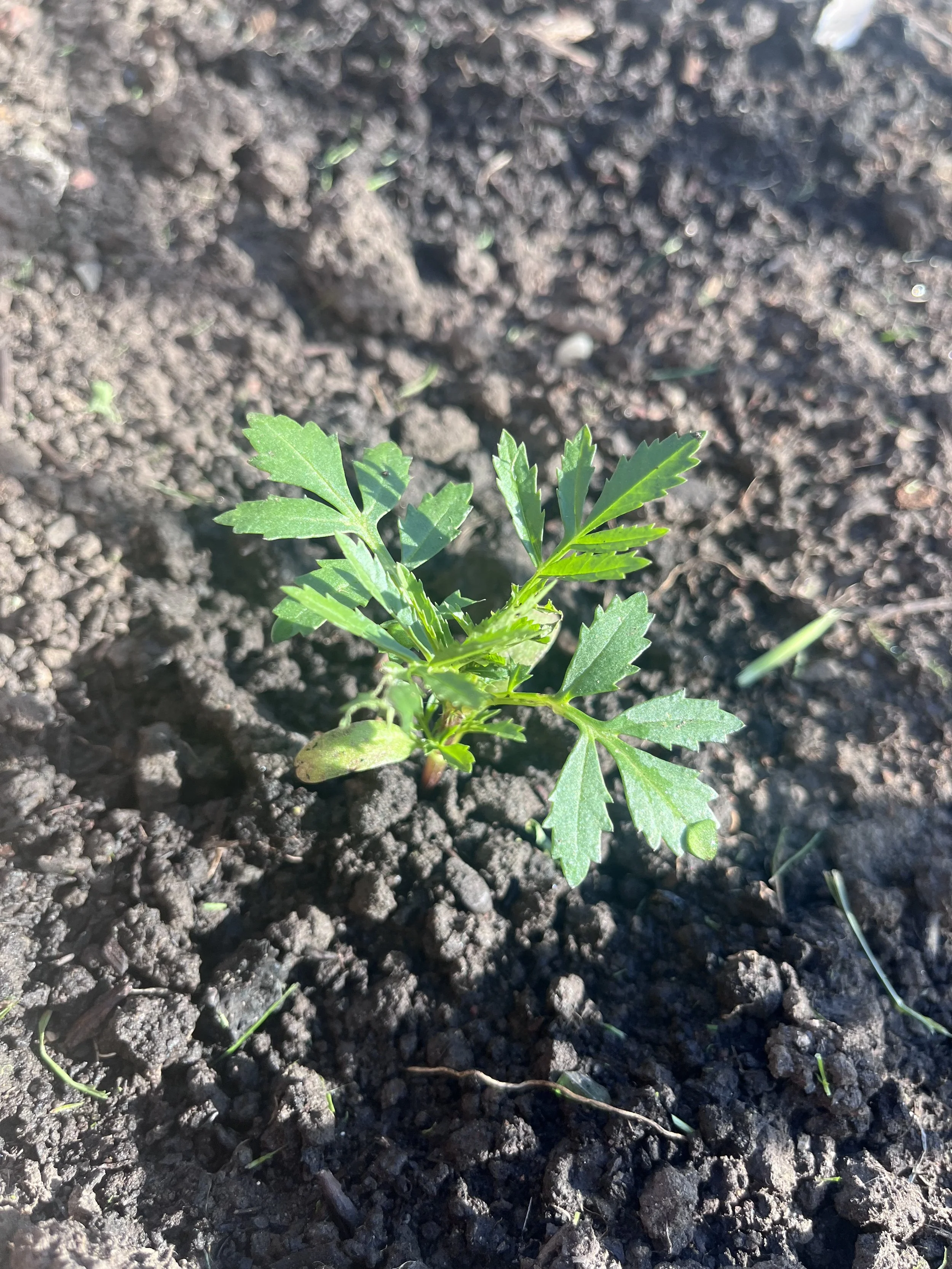
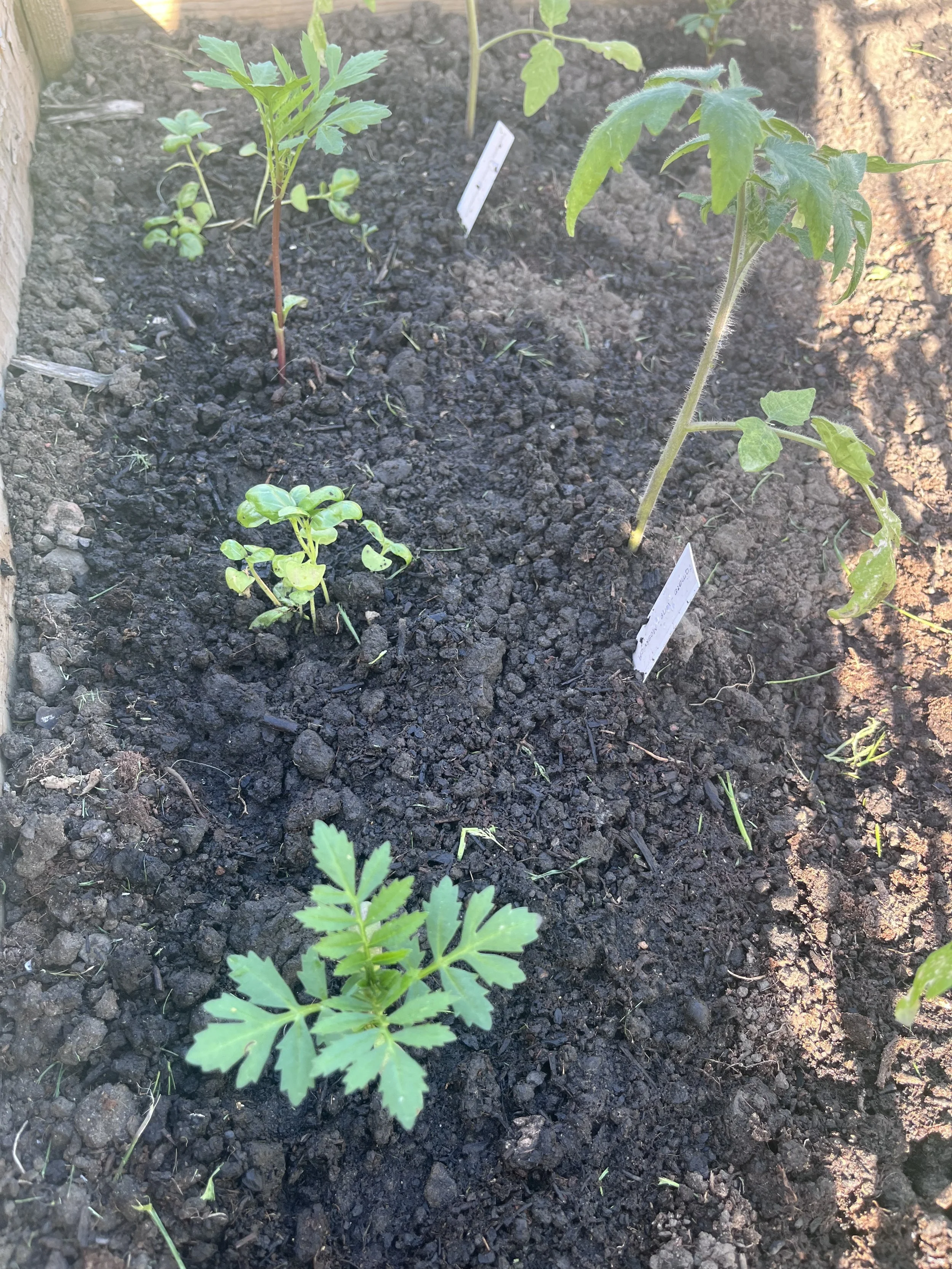
Pictured are a selection of this years marigolds that have been planted out alongside our tomatoes and basil.