Reclaimed Canvases Project.
At the start of this year I continued with my reclaimed canvases project that I started in 2025 - this is where I take canvases (in a very loose sense) that would otherwise be discarded and repurpose or reclaim them through a process of priming over the original print or image and then painting on top of them. The main painting that I have been working on since the start of this year follows the same elongated layout that I did last year. For some reason all of the canvases I have collected and received tend to be tall and narrow, which is not something I actively sought out but something I find interesting to reflect on. There is something in that about how the work shapes itself through circumstance and found material rather than through deliberate planning or intention, and I think that sits quite naturally alongside the broader ethos of the project.
The decision to work with reclaimed materials is not just a practical one. It connects to a broader set of questions that have run through my practice across this course around place, ecology, and what it means to make work responsibly in relation to the landscapes I am so drawn to. If place and geography are central to what I am making, then the materials I use and the impact of that making feel like they have to be part of that conversation too. There is something that feels more honest about working with what already exists rather than adding more to the world unnecessarily.
That said, the reclaimed canvas also carries a conceptual weight that goes beyond sustainability. The act of priming over an existing image and painting on top of it feels closely tied to the ideas around concealment and what lies beneath the surface that I have been exploring in relation to neurodivergence and masking. Amanda Thomson writes about landscapes as places where the layers that society places on us begin to fall away, where we are stripped back to something more essential beneath. The reclaimed canvas feels like a physical enactment of that same idea, something hidden underneath, something else emerging on top, and the tension between the two never fully resolved. Kiefer's work came to mind here too, in the way his surfaces build up through layering and material accumulation, carrying history and concealment within the very substance of the paint. Goldsworthy's practice also resonates, particularly his attention to what the land has already given rather than imposing from outside, and Stoop's principle of simplification as a conscious stripping away rather than a reduction felt relevant to the slow, responsive way this painting has developed.
For this painting, rather than basing the image roughly on a photograph or a sketch like I would normally do, I instead tried to paint purely from instinct and see what emerged as things progressed. This felt quite different to how I usually work. Without a predisposed plan to refer back to, I found myself more alert to the painting as it developed, noticing what was working and what wasn't in a much more immediate way. There was something both freeing and exposing about it, in the sense that every mark felt more consequential without a reference point to fall back on. This did make the process feel a bit slower than usual and like it lacked the usual momentum or flow that I can get into. I think part of the difficulty was that the usual sense of conversation between me and the canvas took longer to establish. Normally the process of translating something observed or remembered into paint creates a kind of dialogue, where the canvas starts to speak back and inform what comes next. Without that anchor, I found that back and forth harder to access, at least initially.
Similarly to last time, as a result of the primer used, the ink is intentionally repelled when I first put it on, so it is a slow practice of purposefully building up layers of ink over time and trying to notice the details that I want to keep or work into more. Because there was no predisposed plan or sketch to work from, I found myself being more experimental with texture and with how I approached painting the trees and other plant life. For the trees I went for a more solid brush stroke, while for the ground cover I layered different textures on top of each other, combining something like freeflowing brushstrokes that I then went over with smaller, more purposeful marks.
While I like how the branches of the trees have formed, something about the solid ink feels flat in comparison to the short textured brushstrokes I have been working with in other paintings more recently. The textured brushstrokes are able to achieve an energy and presence that the solid ink strokes cannot quite reach in the same way. I have been thinking about why that distinction feels so significant to me, and I think it connects to something broader about neurodivergence and how that shows up in my practice. There is something in the textured brushstrokes that feels more honest to how I actually experience and move through the world, in the way they resist a single fixed reading and build meaning through accumulation and layering rather than through one sustained, resolved mark. That said, I do think there is value in sitting with both approaches rather than dismissing one in favour of the other, because the comparison itself is useful. It has helped me understand more clearly why I am drawn to the textured brushstrokes and what they are doing in the work that the solid ink strokes are not.
I think part of what this painting is teaching me is that working without a plan means staying open to outcomes you would not have arrived at otherwise. The flatness I noticed in the solid ink strokes is not necessarily a problem to fix but a point of reflection, and that discomfort of something feeling unresolved is often where the more interesting questions about the work begin.
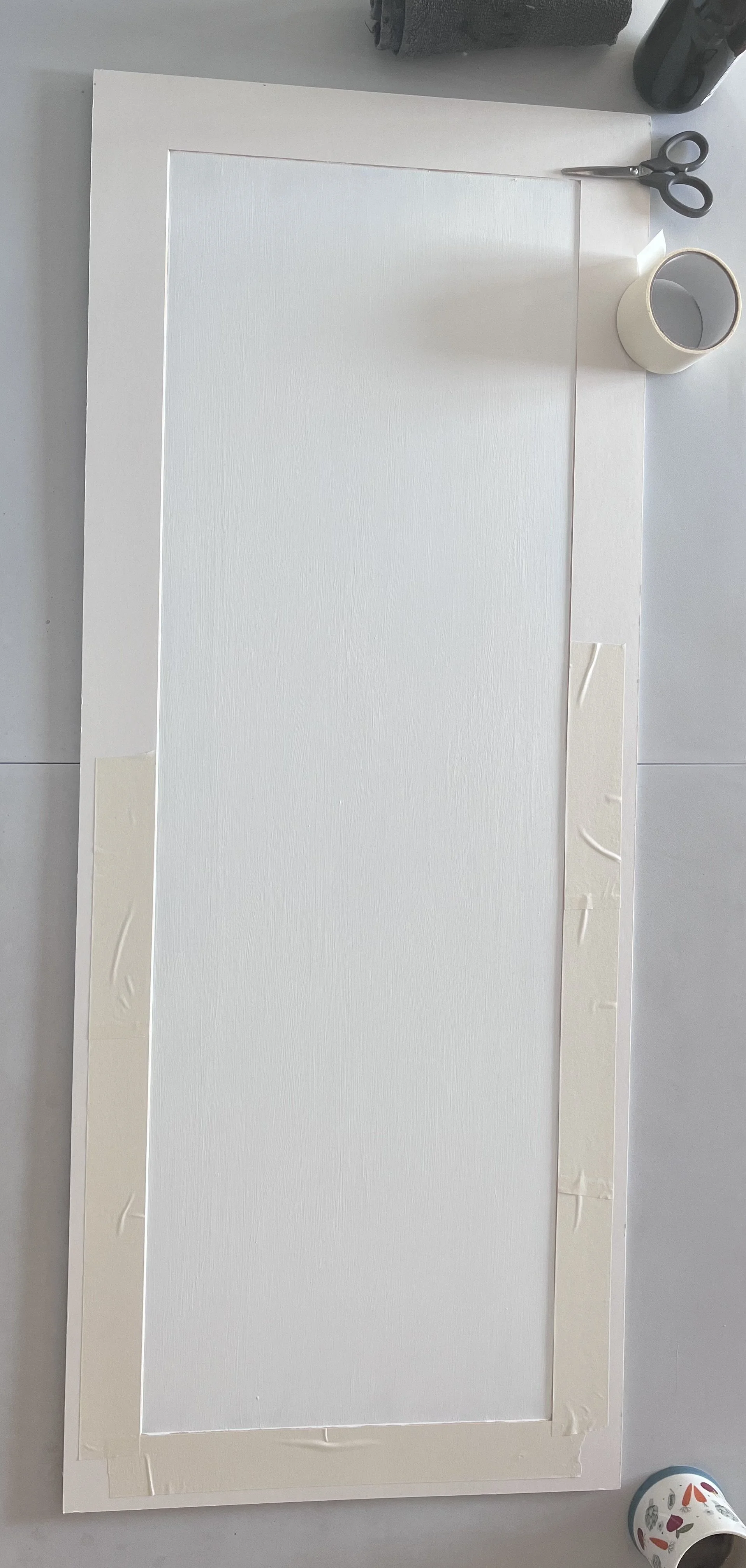
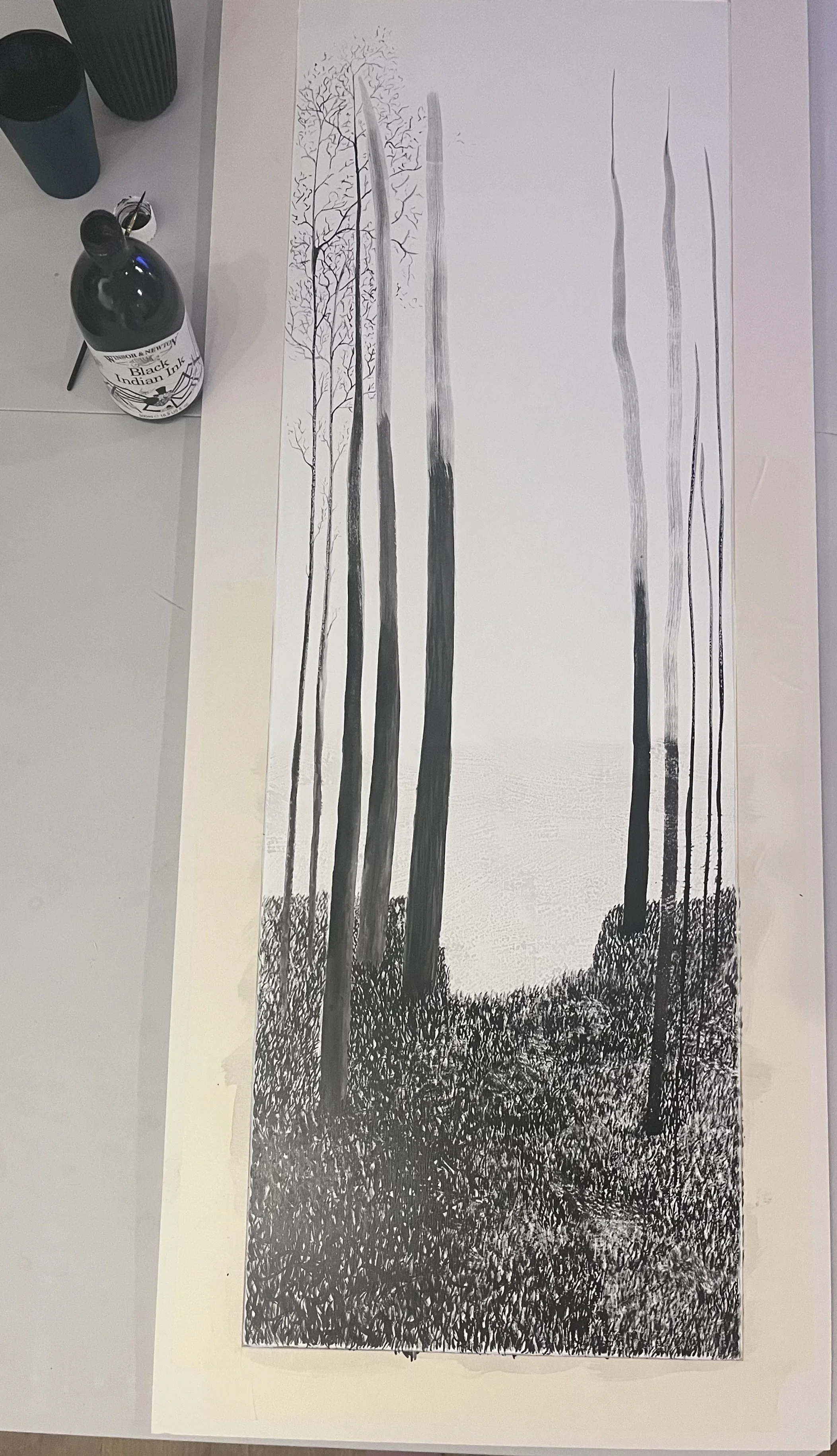
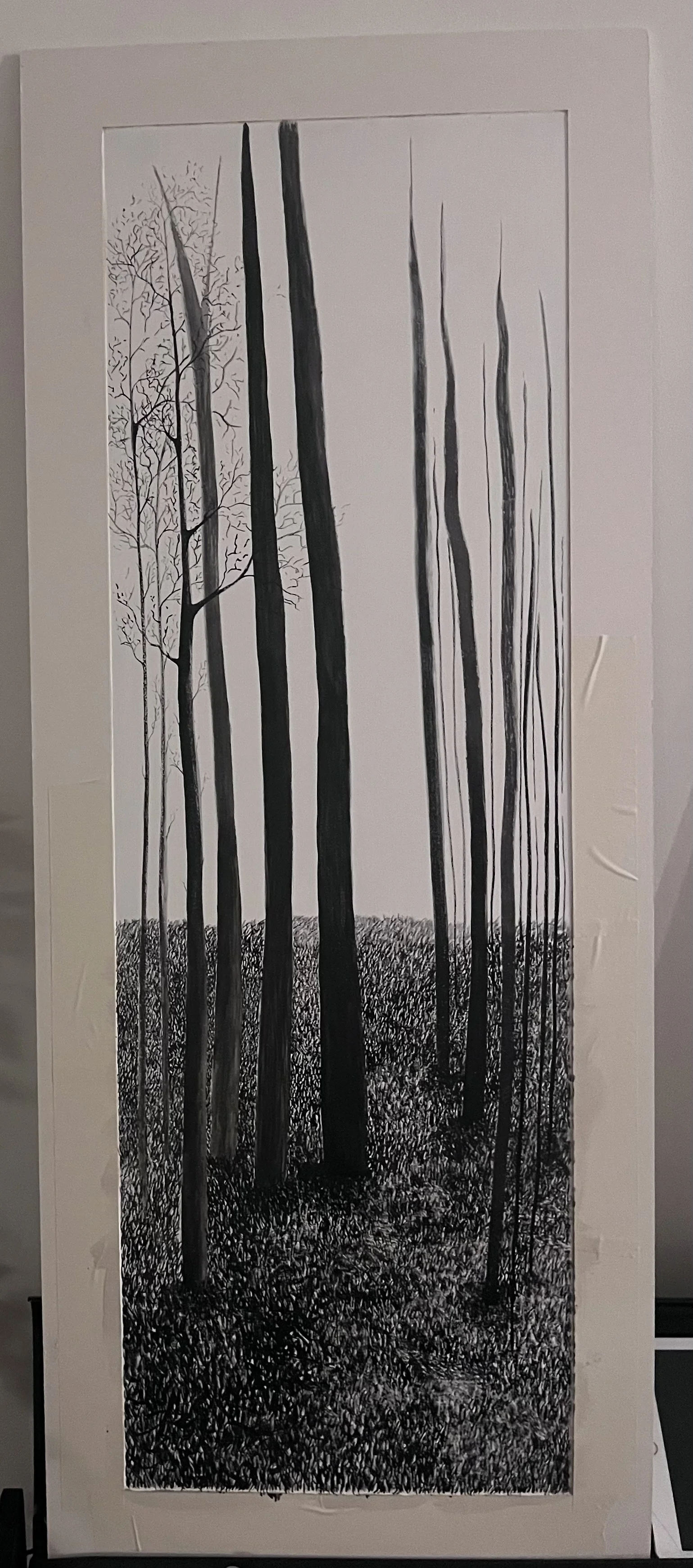
Pictured are some in-progress shots of one of the reclaimed canvas paintings that I have been working on recently.