A1 Painting Series.
For the CSM final show at the beginning of July, I am working on a series of paintings at A1, challenging myself to translate some of my smaller sketches and ideas onto a larger canvas board, and in doing so, drawing together so much of what I have been experiencing and exploring throughout this course. The research into alexithymia, the mark-making that has gradually moved from tentative gestures to something more confident and expressive, the shift in how I think about balance and composition, using less blank space in contrast to where I began, all of it is finding its way into these paintings.
While the canvas is bigger, I have tried to keep the marks and brushstrokes purposefully small, so that even though the scale has changed, the intricacy of the technique remains the same. There's something in that tension that I keep revisiting, the idea that something quiet and considered can still hold a lot of weight when it's given more room to breathe. It's a line of thinking that connects back to seeing Kiefer's work in person at the Van Gogh Museum earlier in the course. Standing in front of those vast canvases, I remember thinking about how the details, all those layers of texture and material, carried just as much energy as the scale itself. You were drawn in to look closely, even as the overall scale made you stop in your tracks. I wrote at the time that I wanted to keep pushing towards that, going as large as I could while still holding onto the small details and movement in my work. These A1 paintings feel like the beginning of that.
They are all inspired by photographs I have taken in the Cairngorms, tying back to so much of the research and feeling that has run through this whole course. The work of Amanda Thomson and Nan Shepherd has deepened my understanding of those landscapes and changed how I move through them, not just as visual references, but as something more emotional and embodied. That sense of deep belonging to a place, the way a landscape can hold memory and feeling without needing to explain it, is something I have been trying to carry into the paintings.
I think of Kees Stoop's work here too, the way he described his guiding principle as simplification, not in a reductive sense, but as a deliberate stripping away of anything that might hint at a narrative. What remained in his work was atmosphere and a mood held in tension. His landscapes feel like moments suspended in time, and there's something in that quality of stillness and charge that I have been reaching for in my own way, though filtered through very different marks, materials and landscapes. His refusal to explain, that deliberate withholding of narrative, is something I find quietly liberating. It gives me permission to let the work simply be, without needing to justify or resolve it.
The sketchbook practice has been really key in getting to this point. It's where I have allowed myself to be more experimental, to push the abstract mark-making further without worrying about the outcome, and what has come out of that freedom is now feeding directly into this series. The marks, when looked at in isolation, are nothing more than abstract brushstrokes, but when you step back to take in the whole that's when you see things coming together. Where one line bleeds into another and the textures scramble over each other and try to find their place to translate the energy of the landscape to the viewer. This is something I couldn't have arrived at if I hadn't given myself that space to explore first.
Looking back to where I was at the start of this course, there is a very clear development. I feel like I know what my goal in my art practice is now, and I can trust more in my voice and in that direction. What is beginning to unfold is a really interesting series of paintings that seem to be taking on a life of their own, and I can't wait to see where they go.
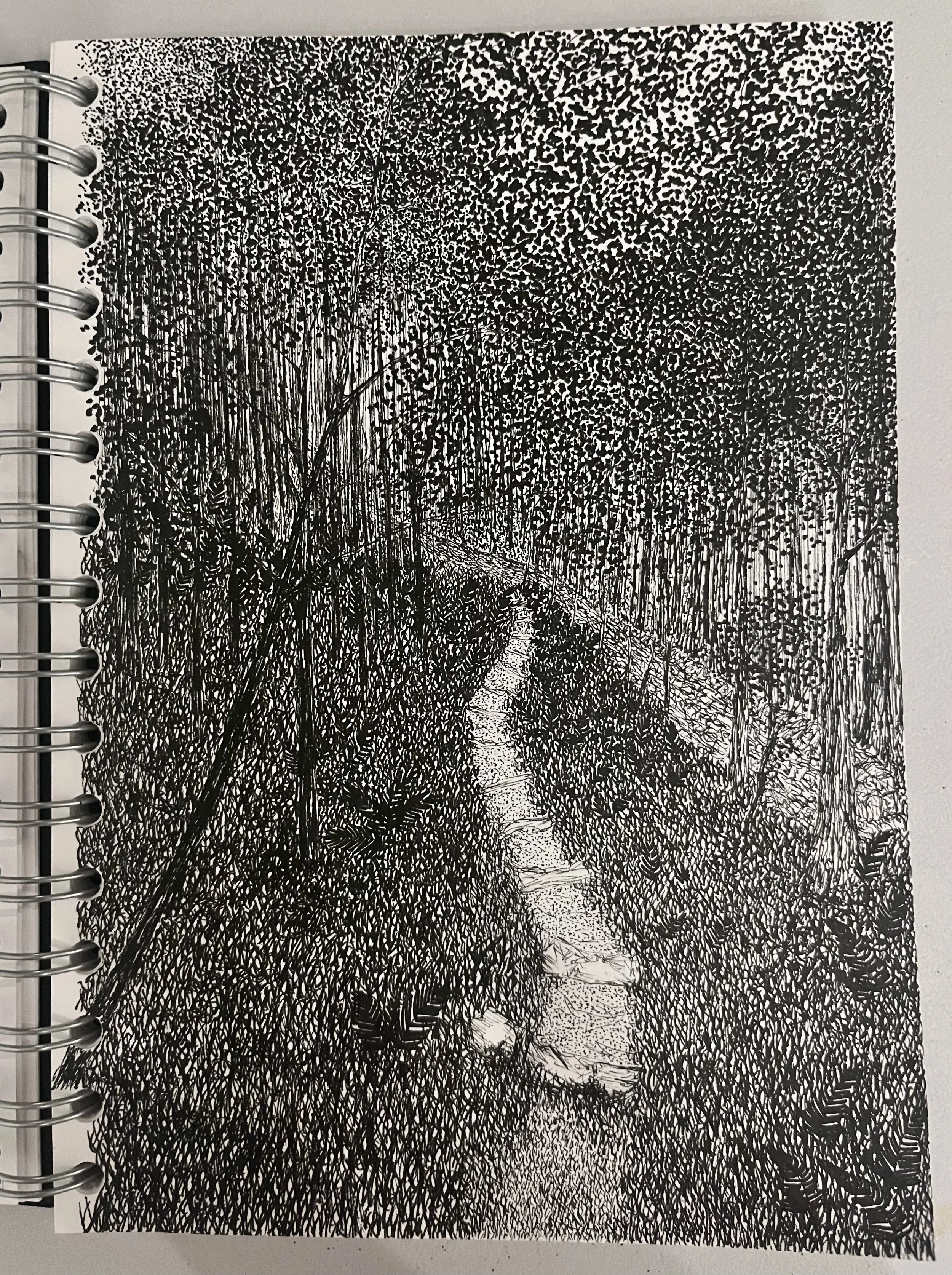
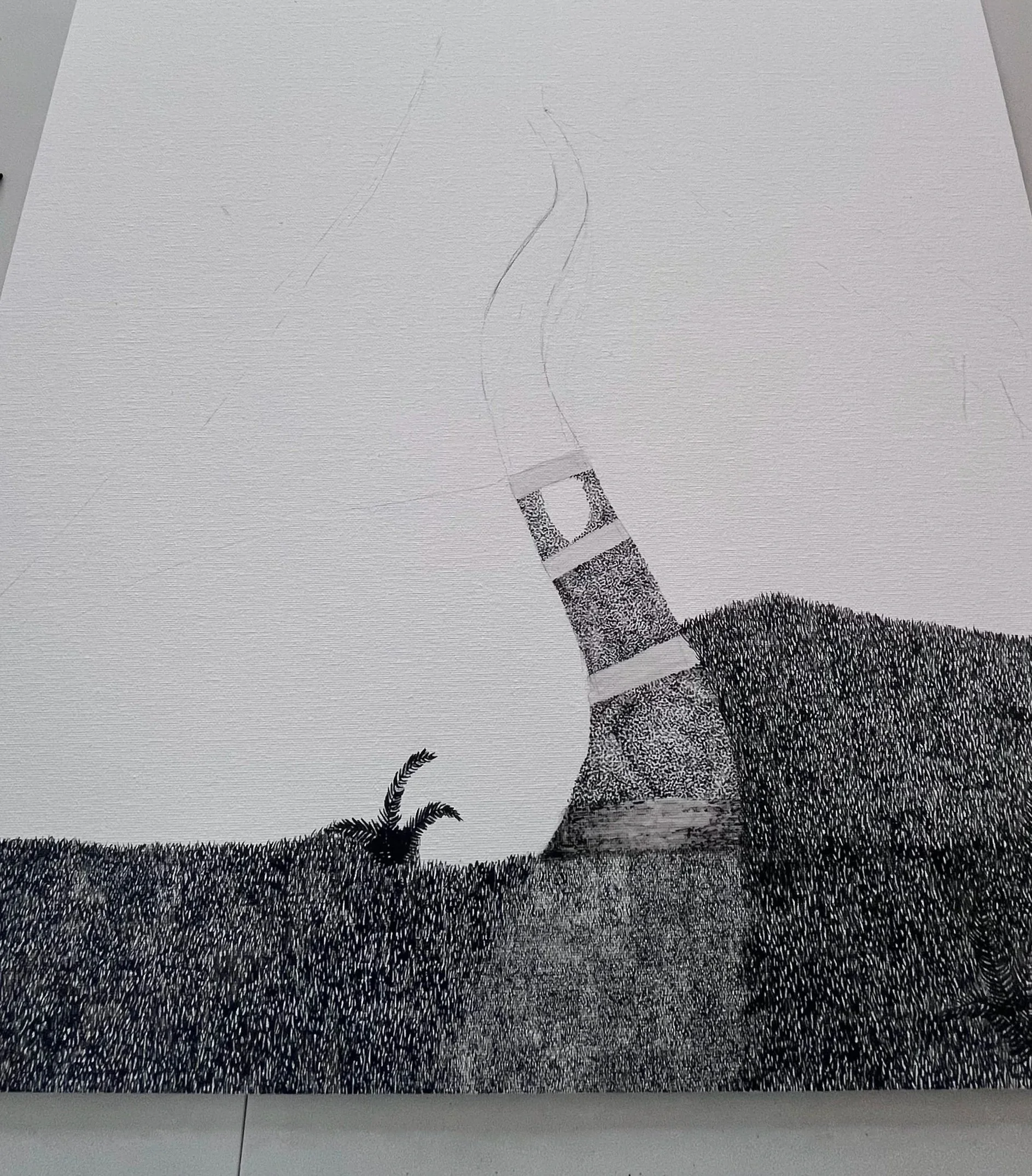
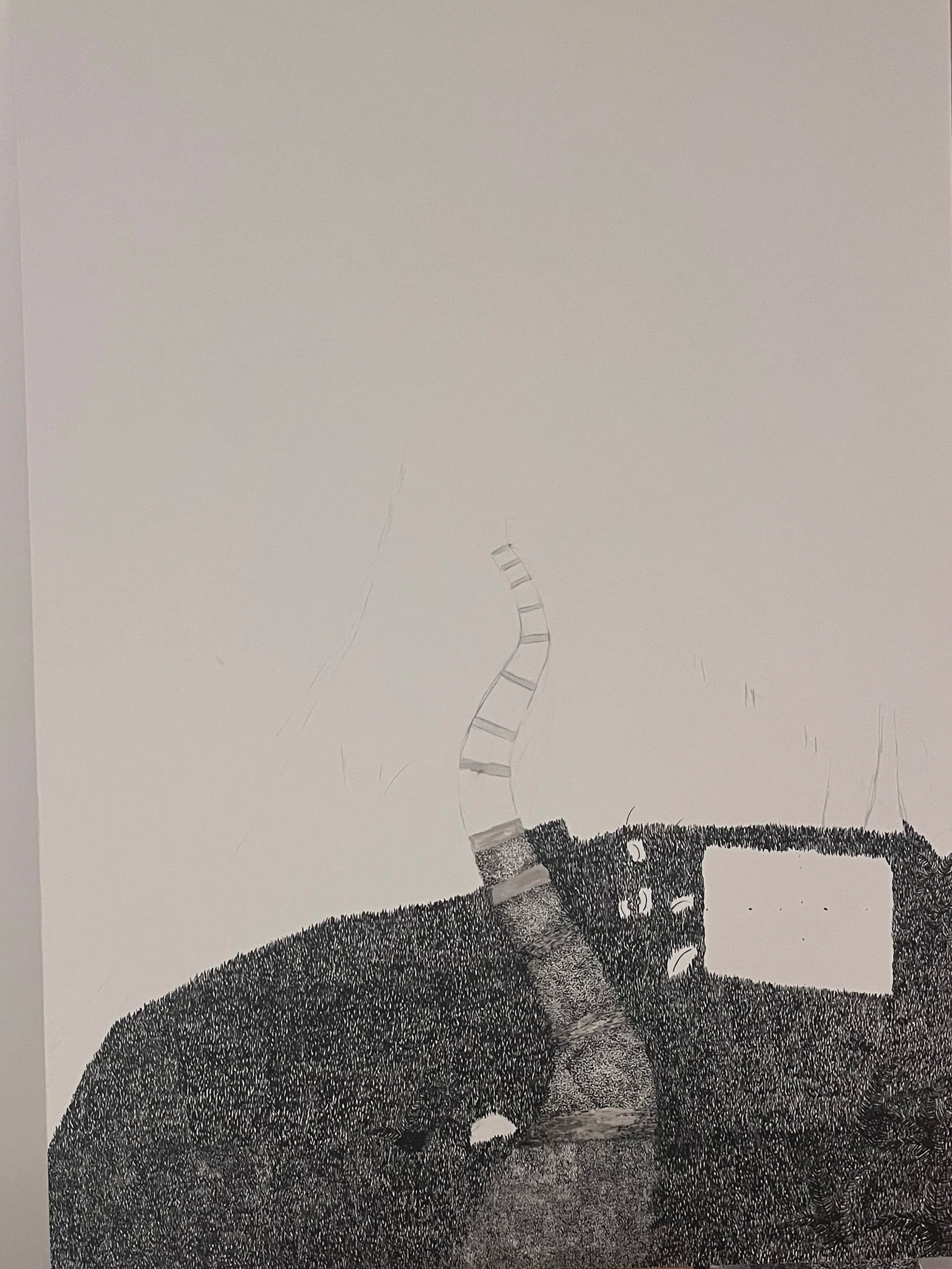
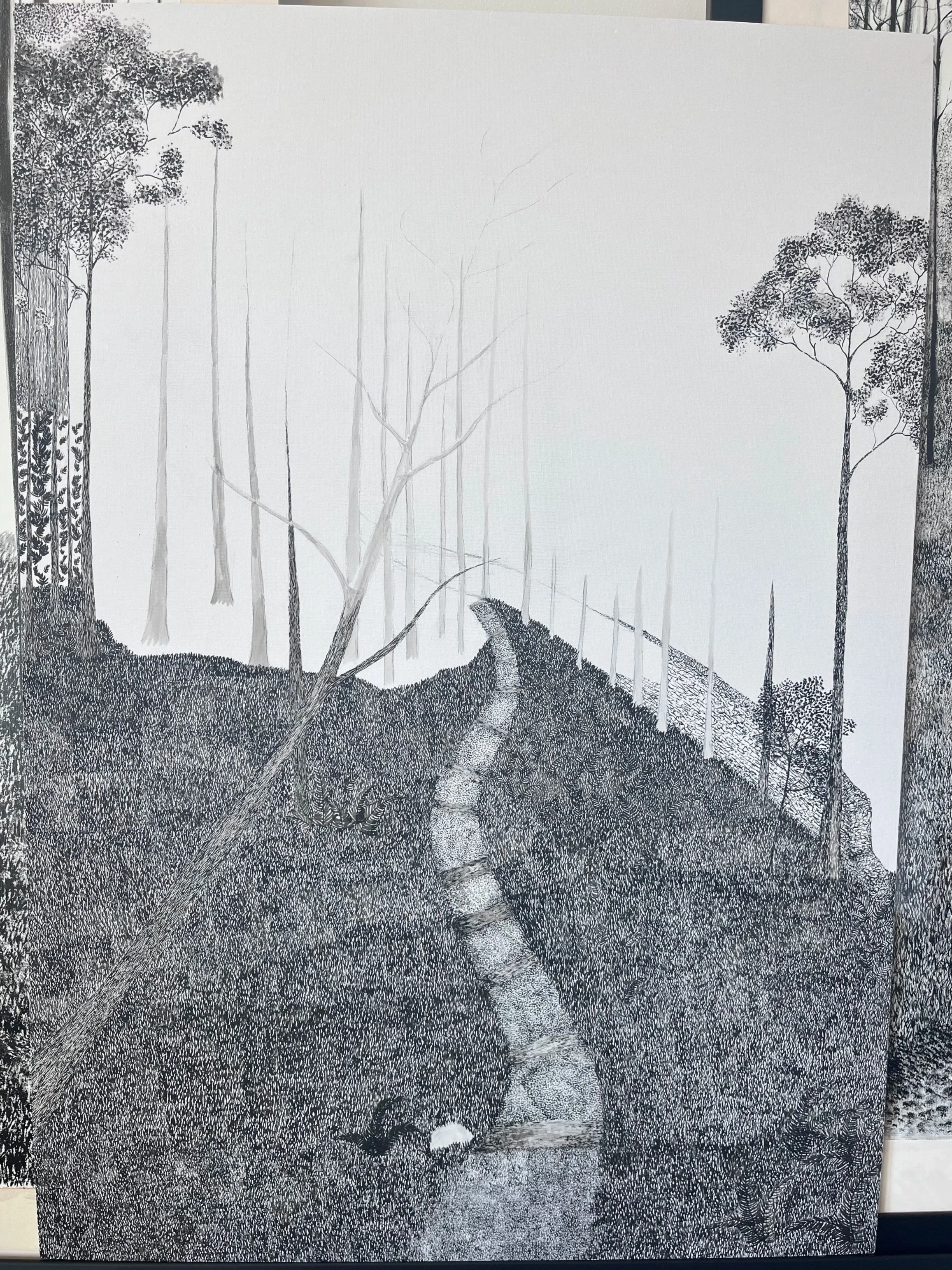
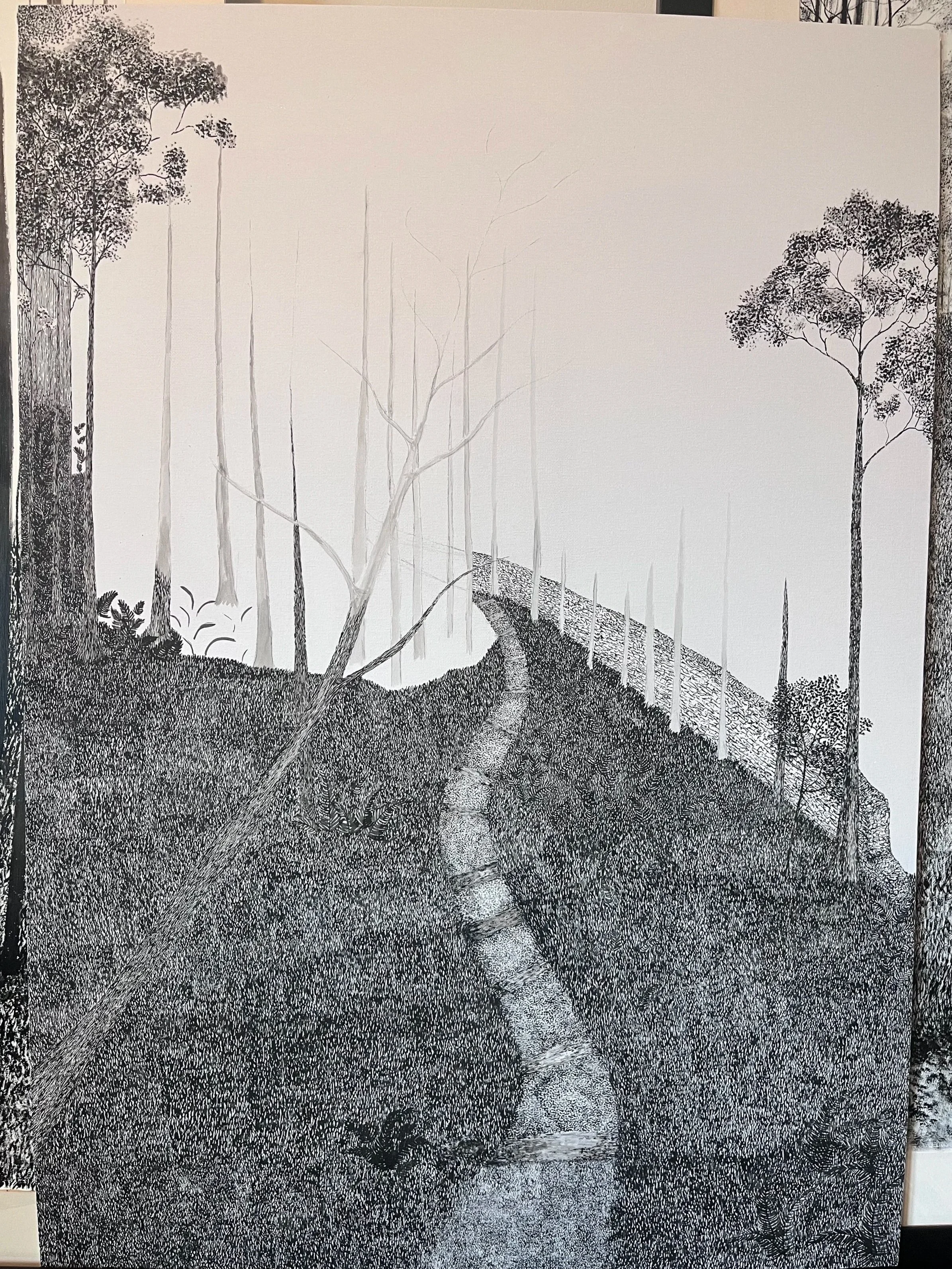
Pictured shows the original sketch for one of these paintings alongside some in-progress images of the larger painting.